THE LIGHTS GO OUT.
YOUR PLAN STAYS ON.
From the phone in your hand to the refrigerator in your kitchen, understand the essentials, choose an appropriate battery system, and build a more resilient home.

Start with real life. Not a wall of specifications.
Every household has different priorities. Instead of choosing the largest unit on the shelf, begin with the devices you actually need during an outage—and how long you need them running.
Four decisions. A smarter setup.
Build a practical plan in the right order. The Outage Proof Planner uses these decisions to calculate an equipment shortlist from the Infenergy catalog.
Choose your essentials.
Identify what should remain available if the grid stops: communications, refrigeration, lighting and other critical devices.
Pick your duration.
Prepare for a short interruption, several days, or an extended event. Longer outages require more energy or recharging.
Check the power.
Compare battery storage with running watts and startup surge, especially for compressors and pumps.
Complete the system.
Pair each station with appropriate charging gear and plan how separate stations will serve your loads.
WATTS RUN IT.
WATT-HOURS KEEP IT GOING.
You need two different checks. A station must have enough output to run or start each appliance and enough stored energy to support the intended hours. These numbers aren’t interchangeable.
Running power
How much power your devices need at a moment in time. Check each station’s continuous AC output.
Stored energy
How much energy the battery holds. Actual usable energy is lower after conversion losses.
60 W × 5 hours = 300 Wh
Illustrative daily energy requirement for one device. Additional reserve, losses and startup demands must also be considered.Power stations for different levels of readiness.
Start small for personal essentials or explore higher-capacity stations for more demanding situations. Final sizing depends on your devices and runtime targets.

AFERIY AF-P010
Compact 512Wh station for selected small devices, communication gear and lighting. Match each connected device to its rated output.
VIEW PRODUCT & LIVE PRICE
AFERIY AF-P210
2,048Wh stored energy and a higher-output platform to evaluate for appliances, based on specific power and starting requirements.
VIEW PRODUCT & LIVE PRICE
AFERIY 3840
3,840Wh nominal storage for larger readiness plans. Compare its inverter output and any expansion or charging requirements.
VIEW PRODUCT & LIVE PRICECapacity values describe nominal stored energy, not guaranteed runtime or simultaneous appliance capability. Check current product listings for the latest specifications, availability and pricing. Solar panels, cables and accessories may be separate products.
Don’t just store power. Plan how to restore it.
Portable solar panels are an important part of an extended outage setup. Match the panel variation to the station’s accepted solar input and use the correct approved charging cable.
Charging is weather-dependent. Solar panels do not guarantee a full daily recharge, and a power station’s battery reserve must still be sized for your needs.
BUILD A MATCHED SOLAR KIT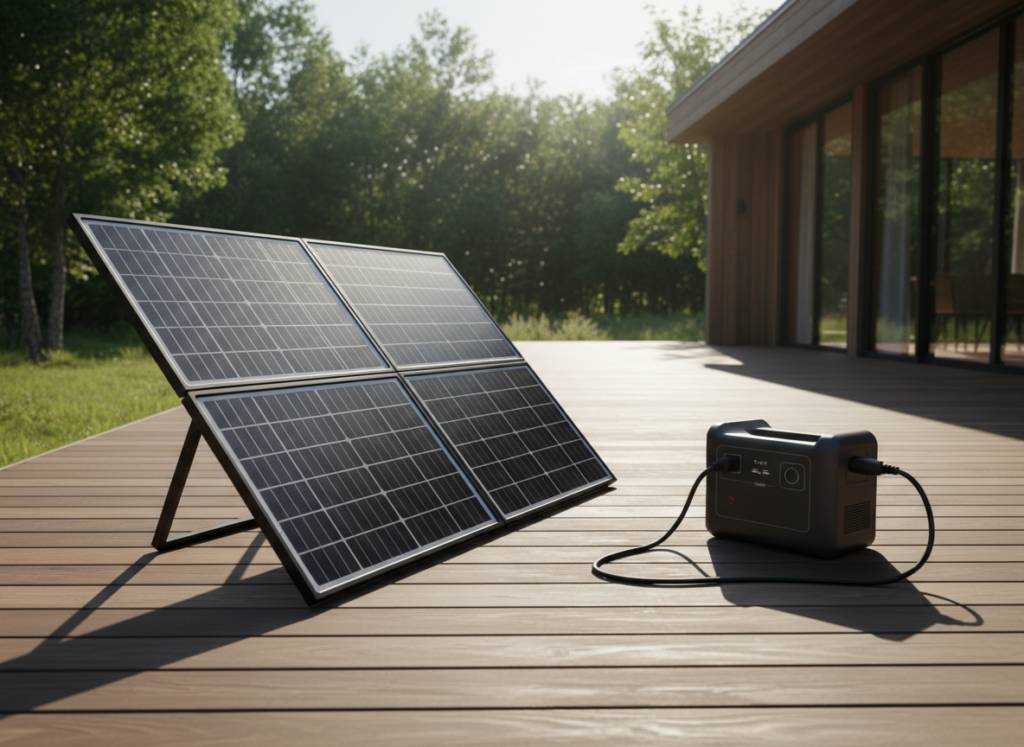 POWER THE NEXT CHAPTER
Prepared before. Safer during. Ready after.
Battery capacity is only one part of outage preparedness. Use these practical reminders alongside your household emergency plan.
Set your priorities.
- Charge portable stations before severe weather arrives.
- List device ratings, power cords and approved charging connections.
- Keep flashlights, a radio, and batteries where you can find them.
- Prepare a separate medical-equipment contingency plan if applicable.
Use energy wisely.
- Limit unnecessary devices and keep refrigerator doors closed.
- Keep battery station vents clear and follow the product manual.
- Never backfeed home wiring using an ordinary outlet or cord.
- Never use fuel-burning generators or outdoor appliances indoors.
Restore readiness.
- Recharge and inspect your equipment after power returns.
- Check food temperatures and discard anything unsafe.
- Review which devices mattered most during the interruption.
- Keep the next outage plan updated as your household changes.
Safety references: Ready.gov and CDC emergency power guidance. Consult qualified professionals for medical devices or any home electrical integration.
Know more. Choose better.
Common questions before choosing backup power. For exact devices and runtimes, use our Outage Proof Planner and verify manufacturer ratings.
How long will a portable power station run my refrigerator?
It depends on the refrigerator’s actual energy use, compressor cycling, startup surge, battery losses and other connected loads. Verify the model’s input and use conservative battery capacity calculations.
Can I combine multiple power stations?
Multiple independent stations can support separate devices and extend total stored energy. Their inverter outputs should not be assumed to combine into one larger outlet or home circuit.
Do solar panels charge my station during an outage?
Compatible solar panels can recharge stations when sufficient sunlight is available. Actual production depends on weather, orientation, wiring and the station’s accepted input limits.
Can I power my home by plugging a station into a wall outlet?
No. Never backfeed home wiring through a household outlet. Whole-home or circuit-level backup requires approved transfer equipment and a qualified electrician.
What about CPAP or other medical equipment?
Medical devices need their own verified backup and contingency plan. Confirm all electrical specifications and clinical requirements with the manufacturer and care team; do not rely on an unverified consumer-runtime estimate.
Turn what you’ve learned into a power plan.
Choose your devices and outage duration, then explore a personalized equipment kit with power stations, matching solar panels and live product pricing.